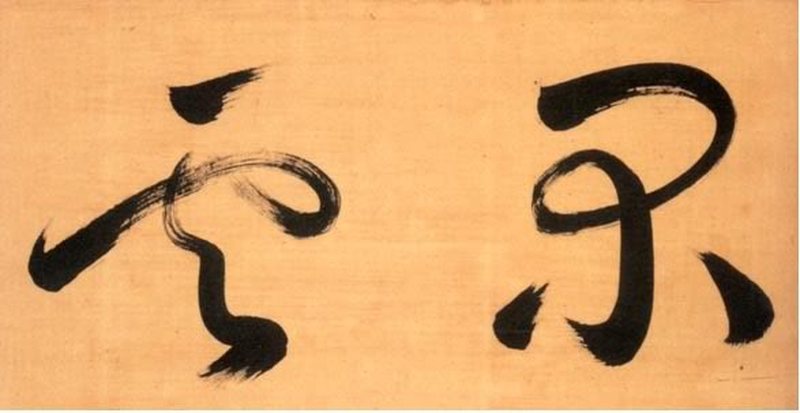
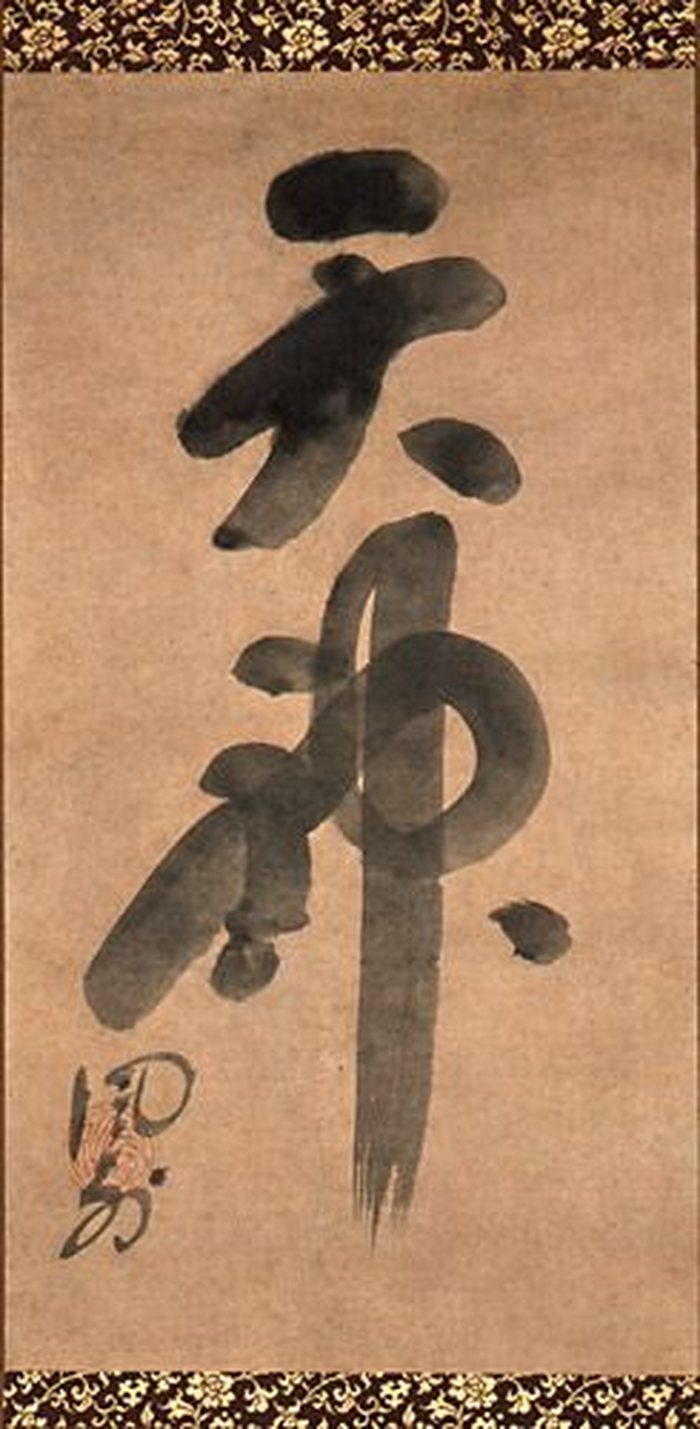
Calligraphy

In Zen, writing is not an ornament: it is a practice. Tracing a character engages the entire body, the breath, the posture — exactly like zazen. The great calligraphies of masters, called bokuseki (墨跡, "ink traces"), are preserved as living teachings, sometimes as national treasures.
Shodō, the Way of Writing
Calligraphy is designated in Japan by the word shodō (書道), "the way of writing". The term is not neutral: it places writing on the side of practice and awakening, not technique or aesthetics. One does not "do" calligraphy as one would make a drawing; one practices it as one practices a path, with constancy and availability.
The brush imposes its rules: no repentance, no retouching. The stroke is placed once, or it is not. Ink cannot be taken back. It is in this that the gesture of the calligrapher resembles that of the meditator: everything is decided in the instant, without return, and hesitation is visible.
Bokuseki: The Ink Traces of Masters
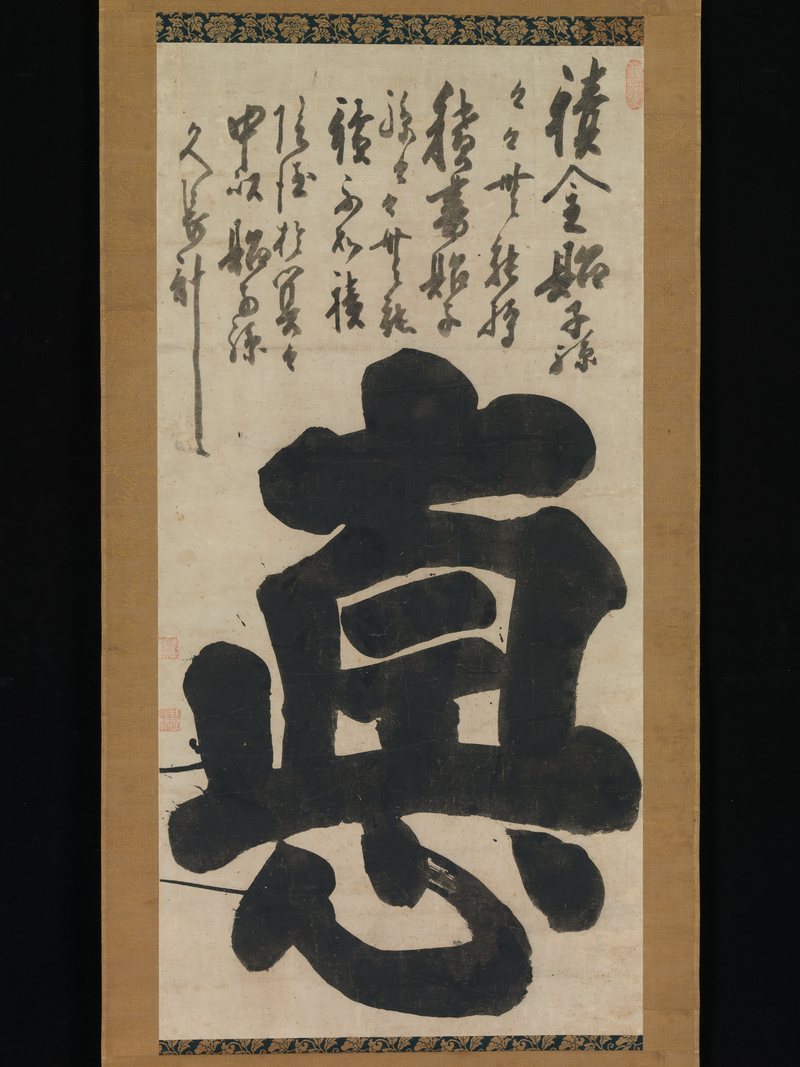
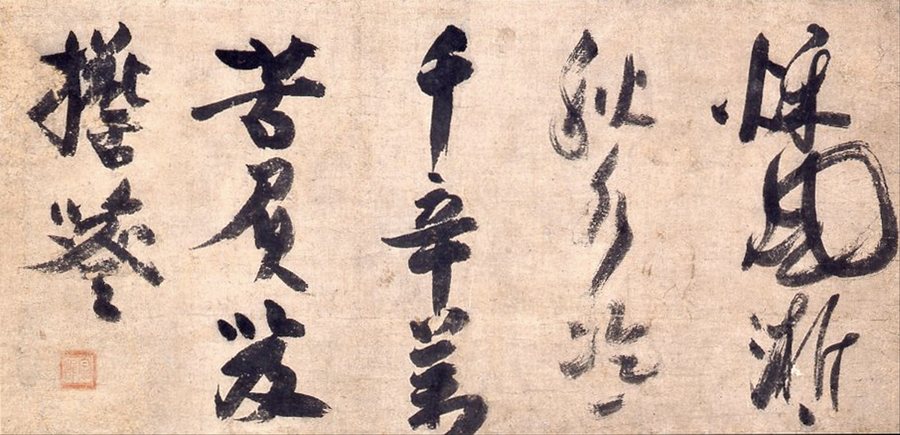
The term bokuseki (墨跡) refers to the autograph writings of Zen masters — maxims, poems, verses, words of awakening traced freehand. They are not "works of art" in the modern sense: they are objects of practice, transmitted to be looked at, read, and meditated upon. Their value lies not in the beauty of the stroke but in the presence they attest to.
Their style is often abrupt, not very expansive, almost rough. A master writes as he breathes: quickly, without affectation. The characters can be irregular, the ink pale in places — this is precisely what makes them bokuseki and not exercises in academic calligraphy.
The Ensō, the Circle
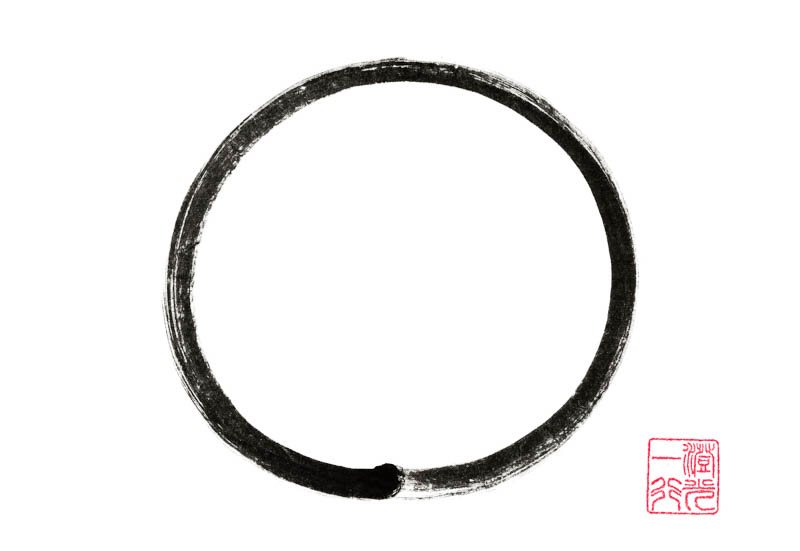
The most well-known motif is the ensō (円相) — the circle traced in a single breath. Sometimes closed, sometimes open, it is not a symbol in the strict sense: it does not "represent" anything. It is the gesture itself, and this gesture expresses the essential — fullness and emptiness, completion and incompletion, whole presence and lack of pretense.
Writing in Monastic Practice
In the life of the monastery, one writes a lot. Copying sūtras, called shakyō (写経), is done by hand, character after character, with the same posture and attention as zazen. It is not administrative transcription: it is an offering, and a way of entering the text through the body.
Titles, the names of masters, dedicatory verses, notes for ceremonies — everything is traced by hand. Writing is part of the ordinary fabric of the day, just like sweeping or cooking.
Some Master Calligraphers
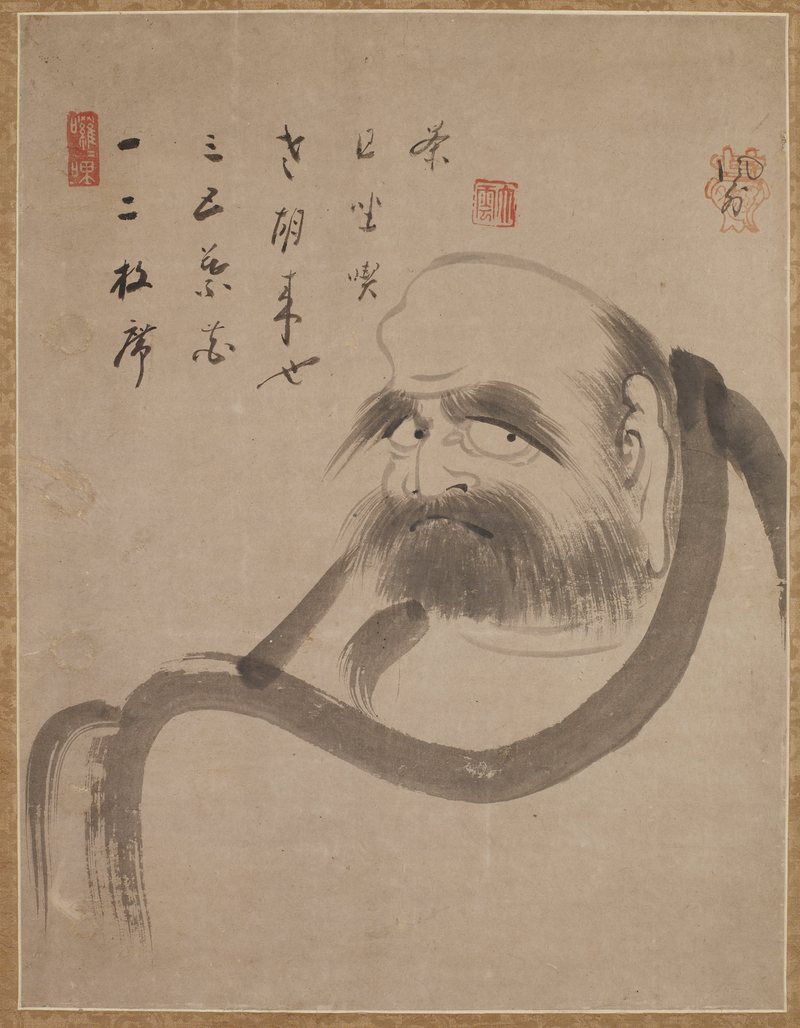
Fūgai Ekun (風外慧薫, 1568–1654), a Sōtō master from the Sagami region, remains famous for his portraits of Bodhidharma and his inscriptions, of an immediately recognizable abruptness. He belonged to no official lineage and lived in seclusion, which did nothing to diminish his influence.
Hakuin Ekaku (白隠慧鶴, 1686–1769), a Rinzai master, is perhaps the most famous Zen calligrapher: he willingly wrote for ordinary people, in large, legible characters, with an energy that never flagged. Other names are significant — Bankei Yōtaku (盤珪永琢, 1622–1693), Daitō Kokushi (宗峰妙超, 1282–1337), Nakahara Nantenbō (中原南天棒, 1839–1925) — each with its own grain.
Today
In Western centers, calligraphy often accompanies seated practice: tracing the ensō, copying a sūtra, writing a verse. No need to be skilled. The difficulty lies not in the result but in what it demands: to be there, entirely, for the time of a stroke.