The Kitchen

In a Zen monastery, the kitchen is not an ancillary service: it is one of the most demanding practices of the Way. The one who leads it, the tenzo (典座), nourishes the entire community and, through this, the practice itself. Dōgen Zenji dedicated an entire text to it, the Tenzo Kyōkun (典座教訓, "Instructions to the Cook"), which remains one of the most concrete teachings of Sōtō Zen.
The tenzo, or the Cook as Master
The tenzo is the person in charge of the monastery kitchen. Their duty is nothing like a domestic chore: in tradition, it is entrusted to an experienced, often senior monk, and considered an eminent function. Cooking for five hundred people, it was said, is worth as much as sitting in zazen — because it is the same thing done differently.
In the Tenzo Kyōkun, Dōgen recounts his meeting in China with the tenzo of Mount Ayuwang: an old monk who was drying mushrooms in the sun. Dōgen was surprised that a man of that age would take such pains instead of meditating. The monk replied that the kitchen was his practice, and that one who neglects it neglects their own life. Dōgen retained the lesson: no gesture is too humble to be awakening in action.
The Three Minds of the Cook: sanshin 三心
The Tenzo Kyōkun asks the cook to cultivate three dispositions, called sanshin (三心, "three minds"):
- Kishin (喜心) — the mind of joy: welcoming the task with good humor, without enduring it, and cooking as an offering.
- Rōshin (老心) — the mind of a parent: caring for each guest as for one's own child, without preference or hierarchy.
- Daishin (大心) — the great mind: not limiting oneself to what one likes or knows, embracing broadly, without narrowness.
To this is added a demand for meticulousness: choosing, washing, cutting, seasoning each ingredient with the same care as a master polishing a precious stone. Nothing is left to chance, nothing is done mechanically.
Shōjin ryōri: Temple Cuisine
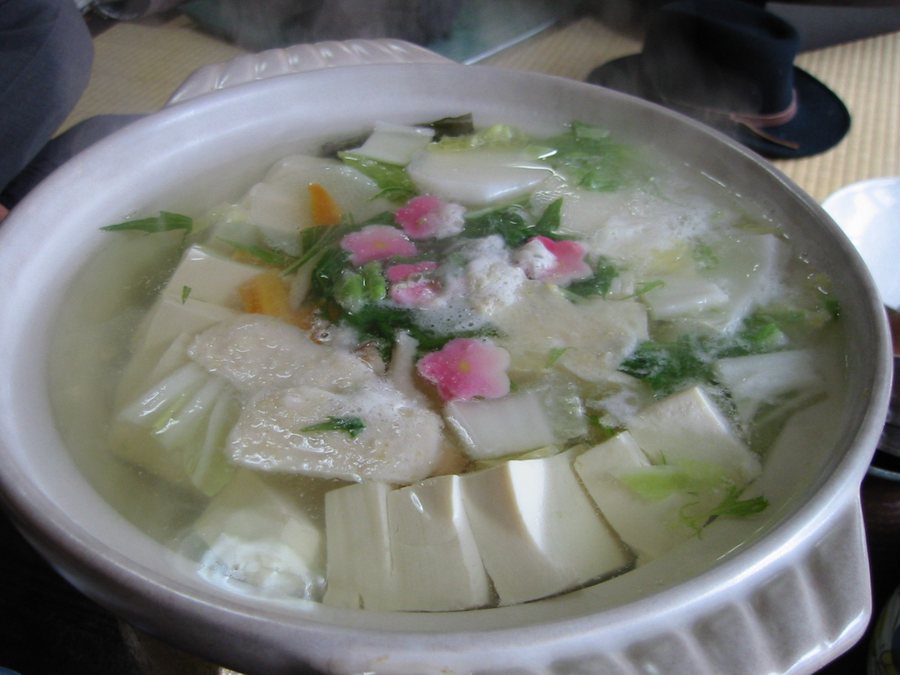
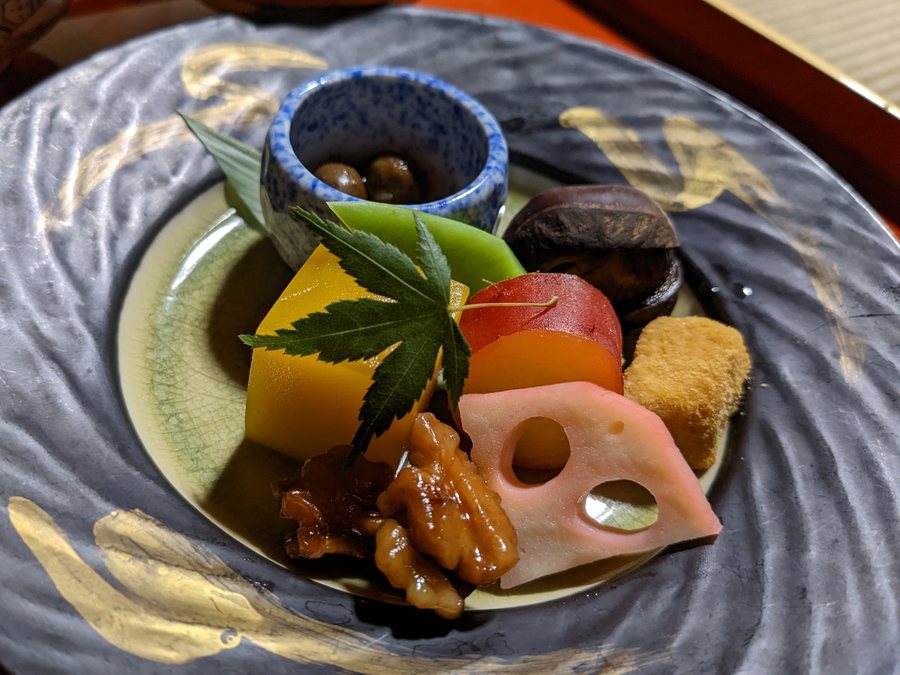
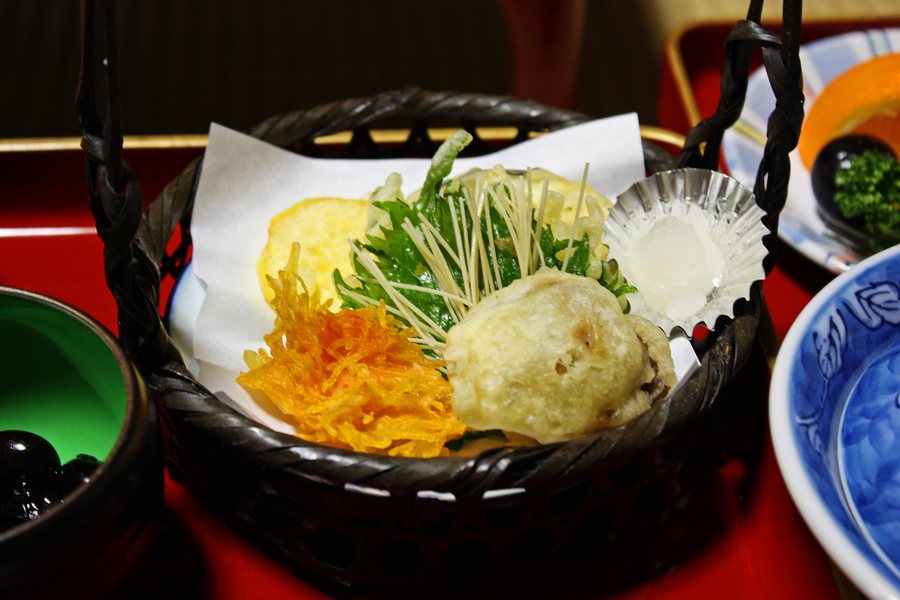
Monastic cuisine gave rise to shōjin ryōri (精進料理), the vegetarian cuisine of temples, without meat, fish, garlic, onion, or alcohol — ingredients considered stimulating or hindering to the clarity of the mind. It favors simple, seasonal products, dried vegetables, tofu, seaweed, pickles. Its success lies not in the richness of the dishes but in the correctness of attention.
Oryoki: The Meal as Ceremony
At the table too, the form is precise. The meal is taken according to oryoki (応量器, "vessels that measure just what is needed"): a set of nested bowls, arranged and wiped in an immutable order, each gesture accompanied by a verse. Receiving the food, eating it, washing the bowls, giving thanks: the meal becomes a complete practice, from the first gesture to the last.
The principle is the same as in the kitchen: nothing is accessory. One receives what comes, eats what one has, lets nothing go to waste. "The essential thing," writes Dōgen, "is that the cook never loses the mind of awakening — that they cook forgetting themselves."
Today
In dojos and Western centers, the kitchen is often the most direct opportunity to practice samu: preparing the communal meal, serving, doing the dishes. It is not a task to be rushed through before returning to the "real" practice — it is one, fully.