Monastic Life

A zen monastery is not merely a place for meditation: it is a form of organization, regulated in detail, where every function serves the practice of all. The layout of the buildings, the distribution of duties, the rhythm of days and seasons—everything is arranged so that awakening occurs in communal work rather than in isolation. Dōgen codified this organization in the Eihei Shingi, and its principles still structure Sōtō temples today.
Monastery and Temple: Two Distinct Realities
In Japanese Zen Buddhism, one must distinguish the monastery (sōrin 叢林, literally 'the forest') from the neighborhood temple (jiin 寺院). The monastery is a community of monks who live there permanently, practicing zazen, working, and taking their meals together. The temple, on the other hand, is most often run by a single resident priest (jūshoku 住職), who provides services for the faithful and families.
The gap between the two is considerable. Today in Japan there are fewer than one hundred true monasteries, but approximately twenty-one thousand temples. Monastic life in the strict sense—the one described by the rules—therefore concerns only a small minority of places, and it is precisely there that the training tradition has been preserved.
The Two Head Temples
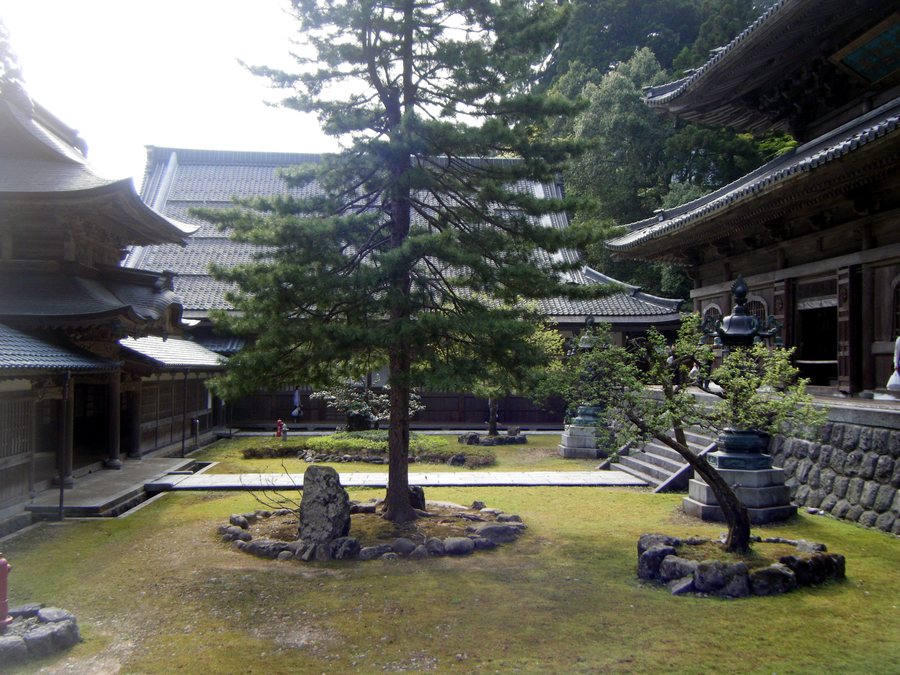
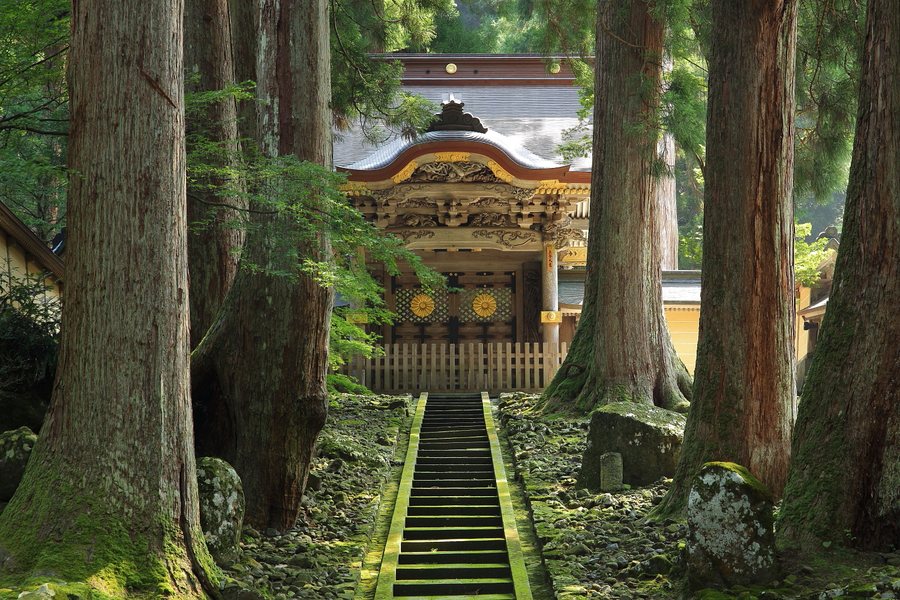
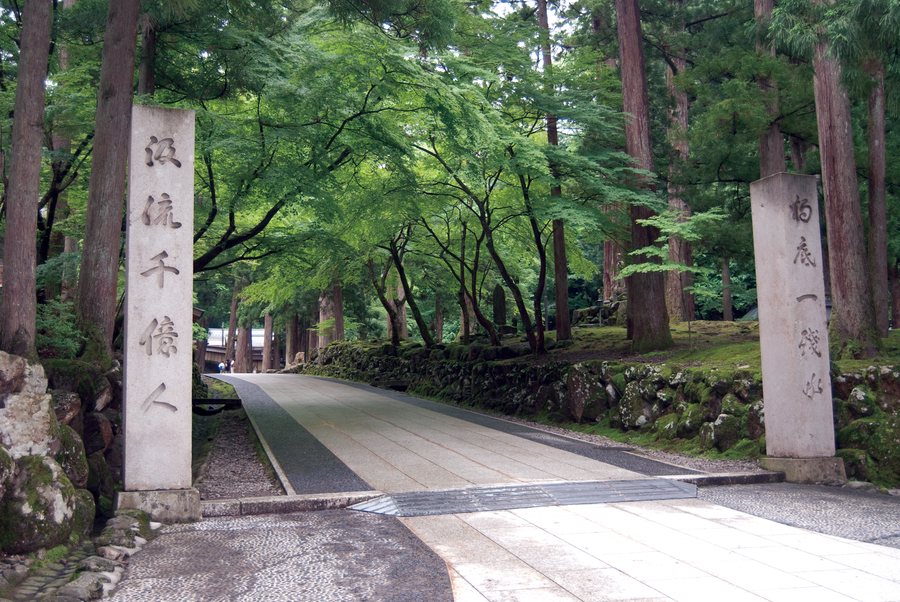
The Sōtō school is organized around two daihonzan (大本山), 'great head temples': Eiheiji (永平寺), founded in 1244 by Dōgen in Fukui Prefecture, and Sōjiji (總持寺), founded by Keizan Jōkin and now established in Tsurumi, Yokohama. These are the only two Sōtō monasteries that still preserve a complex of abbot's quarters (hōjō 方丈) comparable to that of medieval monasteries.
Eiheiji permanently houses over two hundred monks who practice day and night. The two head temples are each led by a kanchō (貫首), and one of the two holds the position of head of the school.
The Monastery Layout
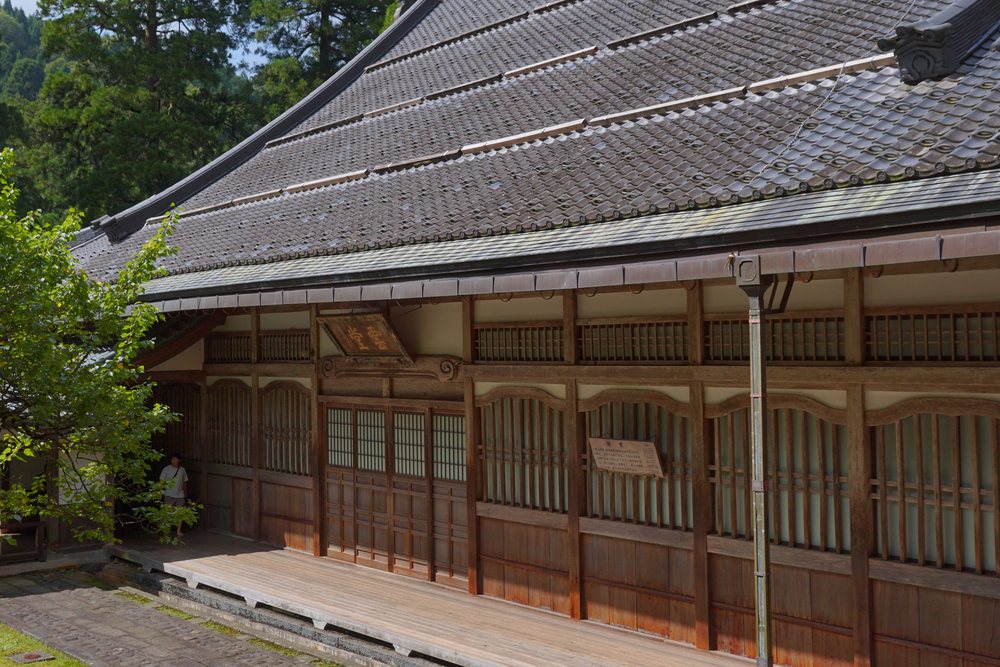
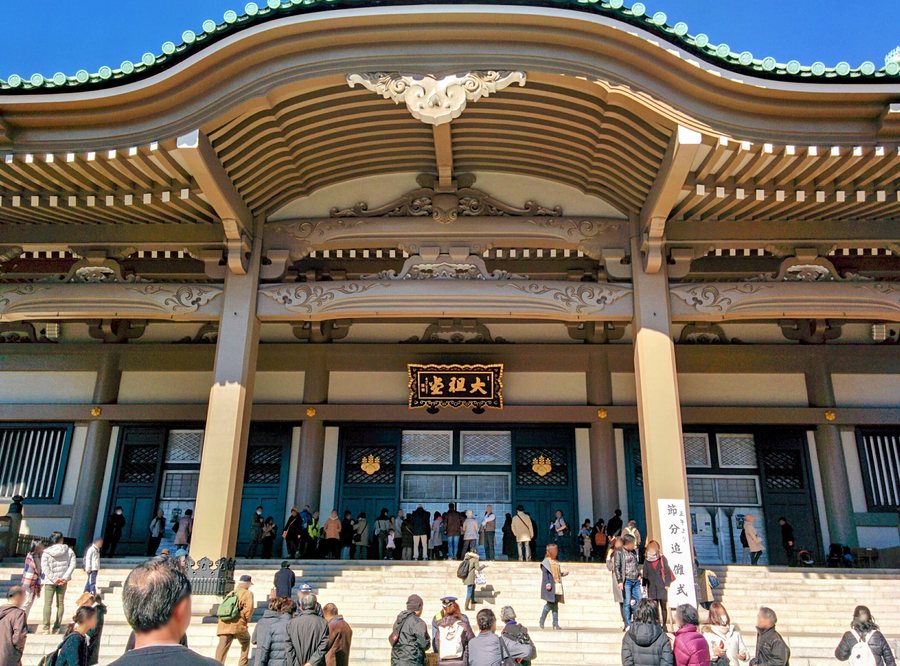
A traditional monastery is organized along a north-south axis, around a few essential buildings: the mountain gate (sanmon 山門) at the entrance, the Buddha hall (butsuden 佛殿) housing the image of Shakyamuni, the Dharma hall (hattō 法堂) where the abbot gives sermons, and the abbot's quarters (hōjō 方丈).
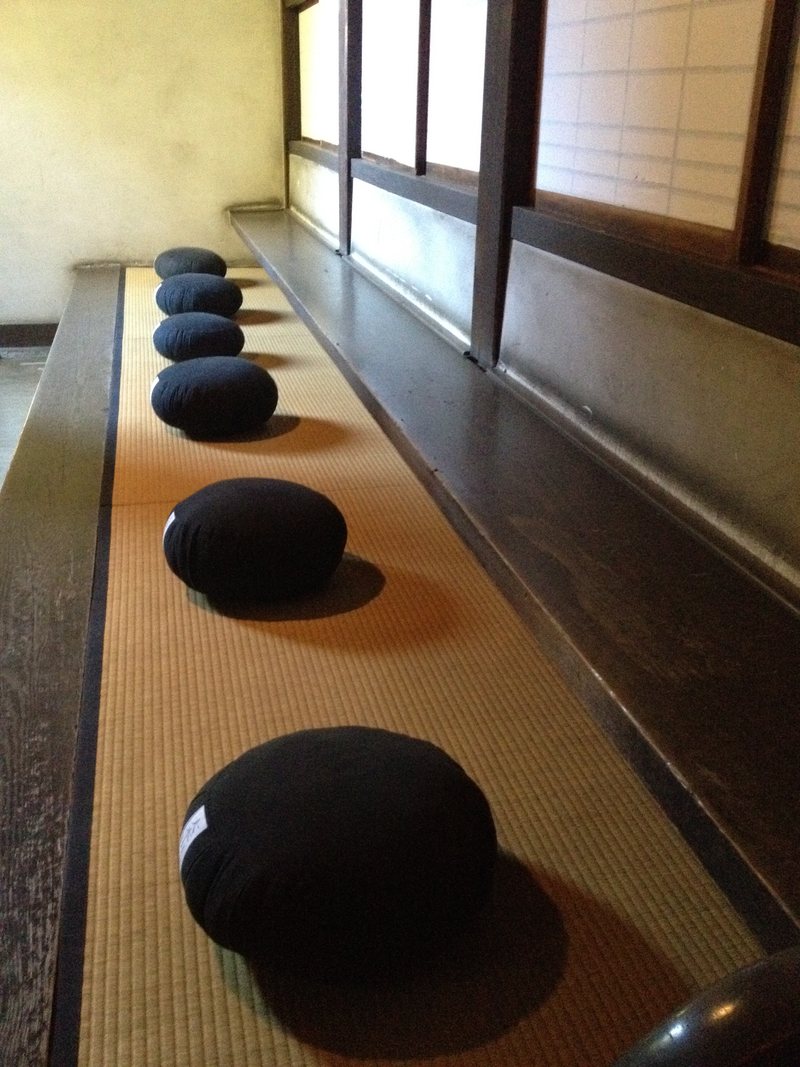
Two buildings constitute the heart of daily life. To the west is the community hall (sōdō 僧堂), also called the meditation hall (zendō 禪堂): this is where the monks sit, eat, and sleep, on the platforms (tan) arranged along the walls. To the east, the administration hall: the two buildings face each other and form the two poles of the monastery—that of practice and that of management. Adjacent to it is the kuri (庫裡), the kitchen-residence.
The Six Stewards: roku chiji 六知事
The administration of a monastery rests on six offices, called roku chiji (六知事, 'the six stewards'), defined as early as the Chinese rules of the Song period and later adopted in Dōgen's Eihei Shingi:
- Tsūsu (都寺) — the prior: the highest office, responsible for the overall administration and smooth running of the monastery.
- Kansu (監寺) — the controller: he oversees the application of the rules and the keeping of accounts.
- Fūsu (副寺) — the sub-controller, specifically in charge of the treasury and current accounts.
- Ino (維那) — the master of ceremonies: he directs the recitation, keeps the register of monks, and regulates the conduct of services.
- Tenzo (典座) — the cook: he prepares the meals for the entire community. Dōgen dedicated an entire text to him.
- Shissui (直歳) — the work director: he assigns tasks and oversees the buildings.
These offices are not honorary positions but services: one receives them for a time, fulfills them completely, and then leaves them. The cook works alongside the prior, and Dōgen insists that none is inferior to another.
Shingi: The Rules of Communal Life
This set of provisions is called shingi (清規), 'rules of purity'. The first is said to have been established by Baizhang Huaihai in the 9th century; lost, it is known only in fragments. The oldest preserved is the Chanyuan Qinggui (禪苑清規) by Changlu Zongze, compiled three centuries later, which served as a model for the entire East.
From this, Dōgen derived the Eihei Shingi (永平清規), the rule specific to the Sōtō school, composed of six parts: instructions to the cook (Tenzo Kyōkun), the way to practice zazen and conduct oneself in the hall (Bendōhō), meal etiquette (Fushukuhampō), rules for the common quarters (Shuryō Shingi), conduct towards seniors, and finally the rules for the stewards (Chiji Shingi). Keizan Jōkin would later add his own Keizan Shingi.
The Monks: unsui 雲水
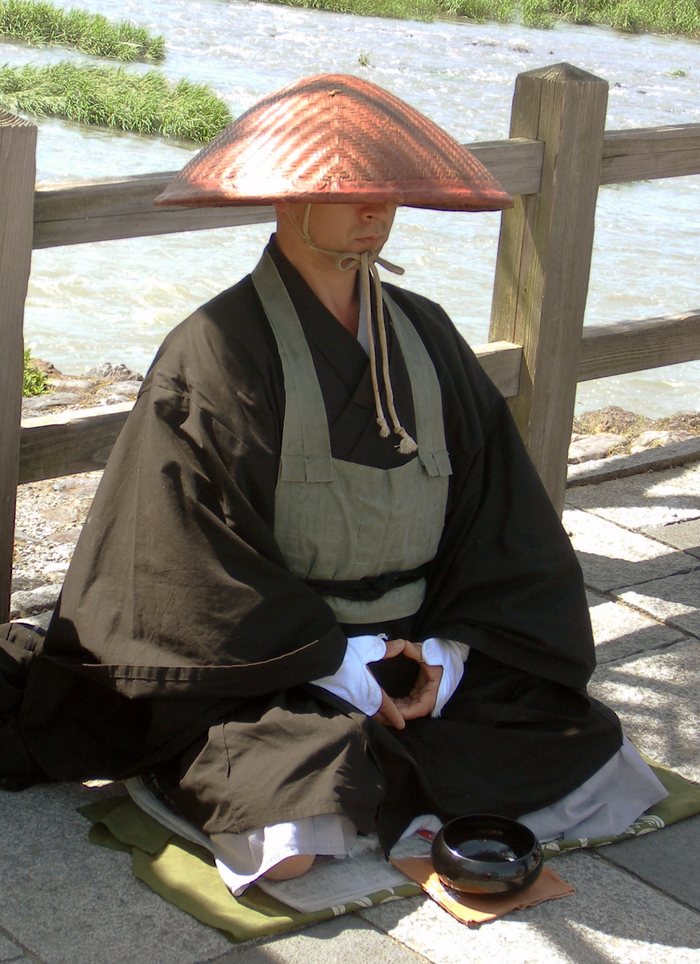
Monks in training are called unsui (雲水) — 'clouds and water,' because they go where they are sent, without attachment, like water flows down and clouds pass by. Entering the monastery requires an ordination (shukke 出家, 'leaving home'), followed by a probationary period before definitive admission.
The life of an unsui follows a tight schedule: very early rising, prolonged zazen, chanting of sūtras, meals taken in oryoki in the hall, communal work (samu), study, late bedtime. Key events mark the year—periods of intensive practice (ango, sesshin), ceremonies, transmissions.
Nothing is left to improvisation: each person's place in the hall, the order of gestures, the way to walk, sit, eat, bow—everything is regulated. Not out of a taste for constraint, but because the form keeps attention awake when motivation wanes.
Today
Most Western practitioners know the tradition through neighborhood dojos rather than through the great monasteries. But when communal life is organized—during a sesshin, in a study center, or during a stay in a Japanese temple—the same principles return: a place for everyone, rotating duties, and shared work as a form of practice.