Shunryū Suzuki
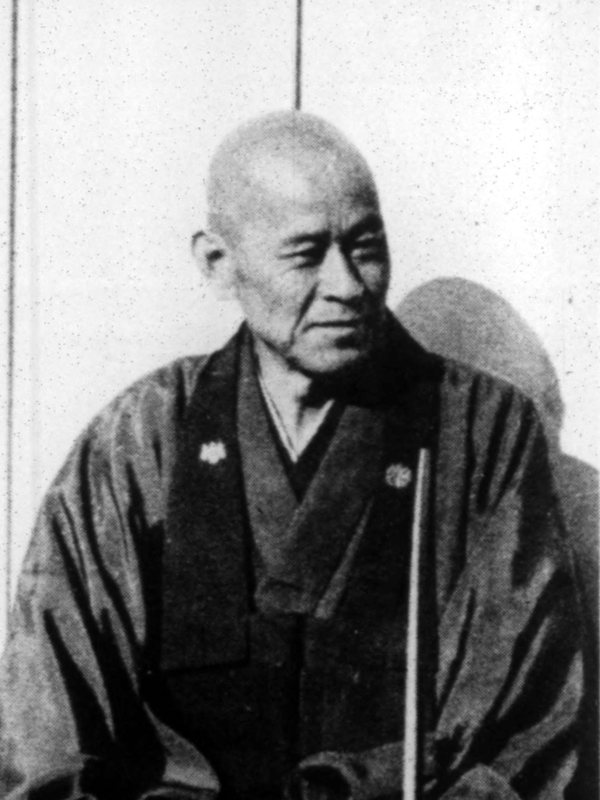
Presentation
Shunryū Suzuki (1904–1971) is one of the most beloved and influential Zen masters in the West. He brought Sōtō Zen to the United States, founded the San Francisco Zen Center and the first Zen monastery in the West, Tassajara. His book Zen Mind, Beginner's Mind has become a worldwide classic, selling millions of copies and translated into a dozen languages. His teaching, disarmingly simple, combines profound wisdom with a gentleness and humor that deeply touched the hippie generation and beyond.
His famous phrase — "In the beginner's mind there are many possibilities, but in the expert's there are few" — has become one of the most quoted spiritual sayings of the 20th century.
Biography
Shunryū Suzuki (鈴木俊隆) was born on May 18, 1904 in Hiratsuka, Kanagawa Prefecture, into a family of Sōtō monks. His father, Sōgen Suzuki, was the abbot of Shōgan-ji (松岩寺). From an early age, the young Suzuki was destined for monastic life. At the age of twelve, he began his apprenticeship at Zoun-ji (増雲寺) under the guidance of a demanding master.
In 1916, he entered Komazawa University High School, the Sōtō Buddhist university, where he studied classical Zen texts. He was ordained a monk in 1919. He continued his studies at Komazawa University, but his thirst for practice drove him to seek a true master. He then met Gyokujun Sōgaku (素岳玉潤, 1879–1968), a master renowned for his severity and the depth of his realization. Suzuki became his disciple and received Dharma transmission in 1930.
Before the war, Suzuki was appointed abbot of Rinso-in (林松院) in Yaizu, his hometown, then of the Eihei-ji branch temple in Shizuoka. He married and had three children. The war was a dark period: Suzuki was called to serve as a military chaplain, an experience that deeply marked him. After the war, he rebuilt his temple and engaged in training young monks.
In 1959, at the age of 55, Suzuki went to San Francisco to serve as abbot of Sōkō-ji (曹渓寺), the Sōtō temple of the Japanese-American community. He did not yet know that he would found one of the largest Zen centers in the West. Very quickly, he attracted non-Japanese American students — hippies, artists, beatniks, Berkeley students — all seeking meaning and authentic practice. Suzuki, with his peaceful smile and hesitant English, welcomed them without discrimination.
En 1962, il fonde le San Francisco Zen Center (SFZC), qui deviendra le centre Zen le plus important des États-Unis. En 1967, il réalise un rêve de longue date : l'ouverture du Tassajara Zen Mountain Center, le premier monastère Zen en dehors d'Asie, situé dans les montagnes de la Californie centrale. Tassajara devient un modèle pour tous les monastères Zen occidentaux qui suivront.
Suzuki enseigne pendant douze ans aux États-Unis. Ses causeries informelles, données en anglais, sont enregistrées et transcrites par ses étudiants. Elles formeront la matière de Zen Mind, Beginner's Mind, publié en 1970. Le livre connaît un succès immédiat et devient une référence mondiale du Zen.
En 1971, Suzuki apprend qu'il est atteint d'un cancer du foie. Il continue d'enseigner jusqu'à la fin, s'éteignant paisiblement le 4 décembre 1971 à San Francisco, entouré de ses disciples. Avant de mourir, il confie la transmission à son successeur, Richard Baker (Zentatsu Baker).
Suzuki's Teaching
Shunryū Suzuki's teaching is deceptively simple. It rests on a few fundamental principles, which he repeated tirelessly with infinite patience. The first is beginner's mind (shoshin, 初心) — the idea that true practice consists of approaching each moment, each action, each relationship with the openness and freshness of a beginner, without preconceptions or expectations.
He insisted on the practice of zazen as the heart of Zen, but without rigidity. For Suzuki, zazen was not a severe discipline, but a natural way of finding oneself. "When you sit," he said, "you just sit. Nothing more. Nothing special." His attitude was so natural that his students said of him: "He didn't do zazen — he was zazen."
Suzuki était aussi un maître de la non-dualité entre le quotidien et le sacré. Pour lui, faire la vaisselle, balayer le sol ou préparer le thé étaient des actes de méditation à part entière. Le Tassajara Zen Mountain Center, sous sa direction, devint célèbre pour l'attention portée aux tâches les plus simples — la cuisine, le jardinage, le nettoyage — comme expressions de la voie du Bouddha.
Son humour discret et sa capacité à mettre les gens à l'aise étaient légendaires. Il accueillait les étudiants les plus dépenaillés de la contre-culture des années 1960 avec la même dignité que les dignitaires japonais. « Le Zen, disait-il, n'est pas une question d'apparence. C'est une question d'être. »
Zen Mind, Beginner's Mind
Published in 1970, Zen Mind, Beginner's Mind is Suzuki's most famous book and one of the most widely read spiritual texts of the 20th century. It brings together a series of informal talks given by Suzuki to his students between 1965 and 1970.
The book is divided into three parts: Right Practice (on zazen and posture), Right Attitude (on how to approach practice), and Right Understanding (on the nature of awakening and the self). The style is remarkable — simple, clear, often poetic, always profound. Suzuki speaks of breathing, ego, emptiness, impermanence, with a simplicity that touches the heart directly.
Le premier chapitre, « L'Esprit du Débutant » (Beginner's Mind), est sans doute le plus célèbre : « L'esprit du débutant a de nombreuses possibilités, mais celui de l'expert n'en a que peu. » Ce simple aphorisme résume l'essence de l'enseignement de Suzuki : la véritable sagesse n'est pas une accumulation de connaissances, mais une ouverture radicale à l'expérience présente.
Legacy
Shunryū Suzuki's legacy is immense. The San Francisco Zen Center he founded is one of the largest and most influential Zen centers in the world, with branches in Berkeley, Marin, and of course Tassajara, the mountain monastery he created. Thousands of practitioners have been trained there, and many masters have emerged from it.
His book Zen Mind, Beginner's Mind has been translated into more than twelve languages and has sold over two million copies. It is often recommended as a first reading for anyone interested in Zen, and it is used in dojos worldwide as a reference text.
Suzuki paved the way for all of American Zen. After him, masters like Dainin Katagiri (his disciple), Philip Kapleau, Robert Aitken, and others were able to establish Zen in the United States. His open, inclusive, and non-dogmatic approach allowed Zen to adapt to Western culture without losing its essence.
At Tassajara, his presence is still palpable — the wooden buildings he helped construct, the trails he walked, the zazen hall where he guided his students. Every year, practitioners from around the world come there for retreats, perpetuating Suzuki's spirit: the beginner's mind.
Quotes
Sources
- Wikipedia — Shunryū Suzuki
- San Francisco Zen Center — sfzc.org
- Shunryū Suzuki, Esprit Zen, Esprit neuf (Zen Mind, Beginner's Mind), Éditions du Seuil, 1977
- David Chadwick, Crooked Cucumber: The Life and Zen Teaching of Shunryū Suzuki, Broadway Books, 1999
- Edward Espe Brown, Tassajara Cooking, Shambhala, 1973
- Michael Wenger, Wind Bell: Teachings from the San Francisco Zen Center, North Atlantic Books, 2001
CC BY-NC-SA 4.0 — Sauf indication contraire, les contenus de ce site sont distribués sous licence Creative Commons Attribution - Pas d'Utilisation Commerciale - Partage dans les Mêmes Conditions 4.0 International.